
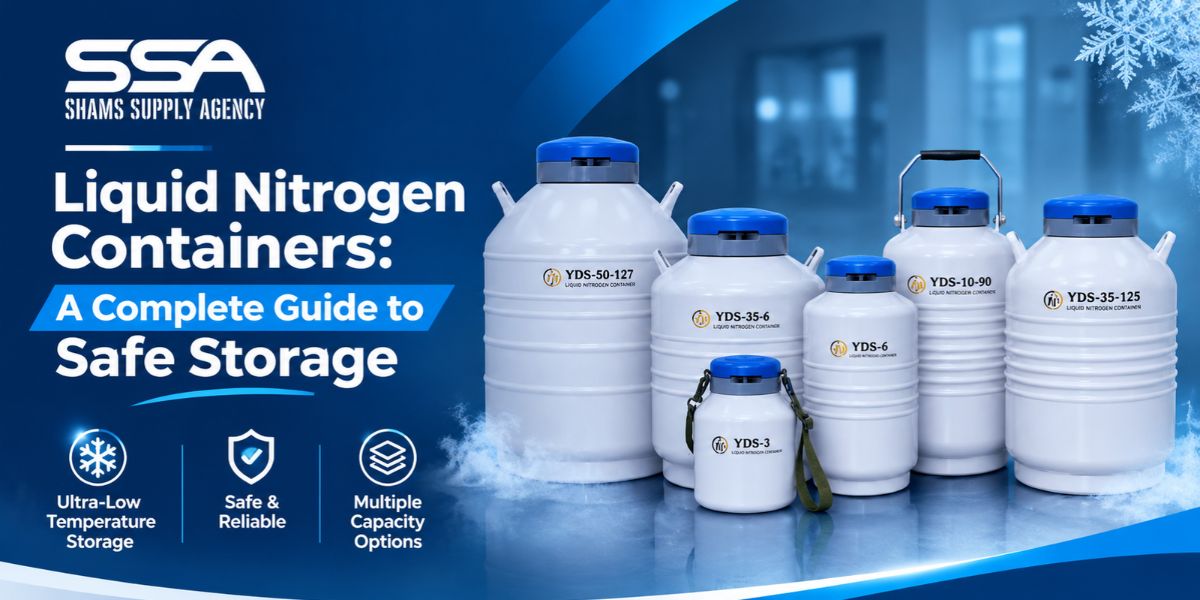
Liquid nitrogen is widely used in hospitals, laboratories, research centers, food industries, and many other workplaces. It is useful because it can keep materials at extremely low temperatures. However, storing liquid nitrogen requires special care. It cannot be kept in ordinary bottles, tanks, or containers because its temperature is much lower than that of most other liquids.
Using the right storage container is important for safety, temperature control, and daily operations. A good container helps reduce liquid nitrogen loss and protects workers from possible accidents. Businesses looking for liquid nitrogen containers jars in Karachi should understand how these containers work, what makes them safe, and how to choose the right one.
This guide explains everything you need to know about liquid nitrogen containers, including their uses, storage methods, safety precautions, and maintenance requirements.
What Are Liquid Nitrogen Containers and How Do They Work?
Liquid nitrogen containers are specially designed storage vessels that hold nitrogen in liquid form at extremely low temperatures. Liquid nitrogen has a boiling point of around -196°C, making it one of the coldest liquids commonly used in industrial and scientific work.
These containers are often called Dewar containers or cryogenic containers. They are made with special insulation that helps slow down heat entering from the outside environment. Most containers have double walls with a vacuum space between them. This design reduces heat transfer and helps keep the nitrogen cold for a longer period.
Unlike ordinary storage tanks, liquid nitrogen containers must allow nitrogen gas to escape safely as the liquid slowly warms and turns into gas. This is why they should never be completely sealed without a suitable pressure relief system. If gas builds up inside a closed container, it can create dangerous pressure.
Different containers are designed for different purposes. Some are made for transporting liquid nitrogen, while others are used for storing biological samples or supplying nitrogen to equipment. Choosing the correct type depends on how the liquid nitrogen will be used.
For businesses and laboratories that work with liquid nitrogen regularly, understanding these basic features helps prevent storage problems and unnecessary waste.
Common Uses of Liquid Nitrogen Storage Containers
Liquid nitrogen containers are used in many industries because they provide reliable cooling for materials that need extremely low temperatures. Their role is especially important in medical, scientific, and industrial settings.
In hospitals and medical laboratories, liquid nitrogen is used to preserve certain biological materials, including cells, tissues, and other samples. These materials often need very low temperatures to remain suitable for future research or medical use. Special storage containers help maintain the required conditions.
Research laboratories also use liquid nitrogen during scientific experiments. It helps researchers cool equipment, preserve samples, and carry out tests that require extremely low temperatures. A suitable container allows workers to handle liquid nitrogen more safely during these activities.
The food industry uses liquid nitrogen for rapid freezing and certain food-processing methods. Fast freezing can help maintain the quality and texture of some food products. However, food businesses must use suitable equipment and follow proper handling procedures.
Liquid nitrogen is also used in manufacturing, engineering, and some industrial cleaning processes. In these workplaces, containers may need to support regular transfers of liquid nitrogen from one piece of equipment to another.
Because every industry has different requirements, it is important to select a container that matches its intended use rather than choosing one based only on size or price.
How to Choose the Right Liquid Nitrogen Container
Selecting a suitable liquid nitrogen container starts with understanding your storage needs. One of the most important factors is capacity. Containers are available in different sizes, and the correct capacity depends on how much liquid nitrogen your workplace uses.
A small laboratory may need a compact container for occasional use, while a large industrial operation may require a bigger storage vessel. Choosing the right size helps reduce unnecessary refilling and makes daily work more convenient.
Insulation is another important factor. A well-insulated container reduces the amount of heat entering the vessel. This helps slow down evaporation and can reduce nitrogen loss during storage. However, even a good container will experience some evaporation over time.
The design of the container also matters. Some models are intended for stationary storage, while others are designed for safe movement and transportation. Containers used for moving liquid nitrogen must be suitable for that purpose and handled according to the manufacturer’s instructions.
Businesses searching for a Liquid Nitrogen Container Supplier Karachi should also consider product quality, available capacities, technical information, and after-sales support. A supplier should be able to explain the intended use of each container and help customers understand its basic safety requirements.
Shams Supply Agency serves customers looking for industrial gas supply solutions in Karachi. When selecting liquid nitrogen storage equipment, customers should confirm the required specifications, intended application, and available options before making a purchase.
Important Safety Practices for Liquid Nitrogen Storage
Safety is the most important part of working with liquid nitrogen. Although nitrogen is commonly present in the air, liquid nitrogen can create serious hazards when stored or handled incorrectly.
One major risk is cold injury. Liquid nitrogen can cause severe frostbite or cold burns if it comes into contact with skin. Workers should use suitable personal protective equipment, including properly selected cryogenic gloves, face protection, and appropriate clothing when handling liquid nitrogen.
Another important concern is ventilation. When liquid nitrogen evaporates, it changes into nitrogen gas and expands greatly in volume. In a poorly ventilated room, the gas can reduce the amount of oxygen available for breathing.
For this reason, liquid nitrogen should only be stored in areas with suitable ventilation and any necessary oxygen monitoring equipment. Storage spaces must also follow workplace safety requirements.
Containers should always remain in a stable, upright position unless their manufacturer specifically allows another position. This helps reduce the risk of tipping, spilling, and damage.
It is also important to avoid using damaged containers. Cracks, dents, unusual frost buildup, or changes in normal evaporation may indicate a problem. If a container shows signs of damage, workers should stop using it and arrange a professional inspection.
Proper training is essential. Anyone responsible for transferring, storing, or handling liquid nitrogen should understand the risks and know what to do during an emergency.
Maintaining Liquid Nitrogen Containers for Long-Term Use
Regular maintenance helps keep liquid nitrogen containers safe and useful for a longer time. While these containers are designed for demanding conditions, they still need proper care.
The outside of the container should be kept clean and dry. Workers should check for visible damage and make sure all required components are in good condition. The neck opening, lid, and other parts should be used according to the manufacturer’s instructions.
Liquid nitrogen levels should also be checked using approved measuring methods. This is especially important when containers are used to preserve valuable biological samples. Unexpected nitrogen loss can affect storage conditions and create problems.
Containers should not be modified or repaired by untrained workers. If insulation fails or a component becomes damaged, the equipment should be inspected by a qualified professional.
For businesses purchasing liquid nitrogen containers jars in Karachi, proper storage and maintenance should remain a priority even after the equipment has been installed.
Finding Reliable Liquid Nitrogen Storage Solutions in Karachi
Choosing reliable storage equipment is an important decision for any business that uses liquid nitrogen. The right container can support safe working conditions, reduce unnecessary nitrogen loss, and make regular operations easier.
Before purchasing, customers should compare container capacities, insulation features, manufacturer instructions, and suitability for their applications. They should also consider whether they need equipment for stationary storage, sample preservation, or transportation.
Working with a knowledgeable Liquid Nitrogen Container Supplier Karachi can make the selection process easier. Clear product information and proper guidance help customers choose equipment that meets their practical needs.
Shams Supply Agency is a name customers can contact when exploring industrial gas supply requirements in Karachi. Discussing your intended use and storage needs before buying can help you identify suitable equipment options.
Liquid nitrogen is valuable across many industries, but its extremely low temperature requires responsible handling. By choosing the correct container, following safety procedures, and performing regular inspections, businesses can protect their workers and maintain dependable storage conditions.
Safe liquid nitrogen storage begins with the right equipment, proper training, and careful daily handling. These simple steps can make a meaningful difference in workplace safety and long-term equipment performance.